

Get your daily news on finance and banking
Provided by AGP
Pramukh Karupakala Shivakumar Explores Market Structure and Capital Dynamics in Modern Trading
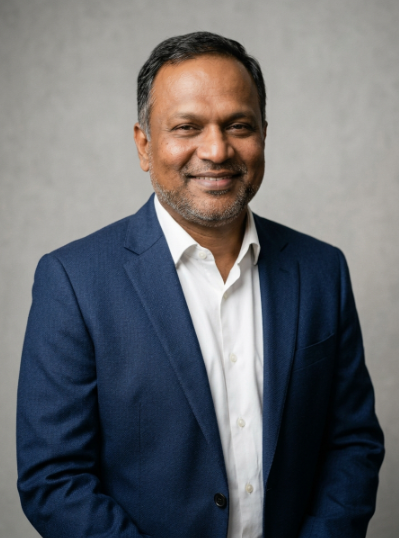
Pramukh Karupakala Shivakumar
A seasoned practitioner reflects on liquidity behavior, execution timing, and the motivation behind building structured private trading frameworks
MUMBAI, INDIA, May 6, 2026 /EINPresswire.com/ -- As global markets continue to evolve under the influence of institutional capital and rapid information flow, the importance of understanding market structure has become more pronounced. Among experienced practitioners contributing to this perspective is Pramukh Karupakala Shivakumar, whose long-standing engagement with financial markets has centered on interpreting liquidity behavior and execution dynamics.
With over two decades of experience, Pramukh has developed an approach that prioritizes how capital is positioned within the market, rather than focusing solely on price direction. His methodology examines how liquidity accumulates, disperses, and reacts to broader market sentiment, offering a framework for identifying potential inflection points. Observers note that this perspective aligns with a growing emphasis in the industry on structure-based analysis, particularly in markets where volatility can shift rapidly.
A key component of his trading philosophy lies in timing and execution. Rather than pursuing constant market exposure, his approach reflects selective participation based on identifiable structural signals. These signals often emerge from the interaction between volume activity, price consolidation, and breakout conditions. By focusing on these elements, the strategy aims to reduce unnecessary exposure and improve the efficiency of trade entries and exits.
Beyond his trading methodology, Pramukh Karupakala Shivakumar has drawn attention to the structural challenges faced by retail market participants, particularly in the Indian financial landscape. Despite India's position as one of Asia's largest retail investor markets, a significant proportion of individual participants are reported to face consistent disadvantages due to limited access to institutional-grade analytical tools, fragmented capital bases, and unequal information flow. His long-term market observations suggest that the disparity between institutional and retail participants—in terms of both resources and execution capability—has been a persistent feature of modern market dynamics, and one that structured frameworks may help address.
His professional experience in the United States, including his time within institutional investment environments, informed his understanding of coordinated capital management models. In particular, he has referenced the concept of pooled retail participation—where individual investors contribute capital to be managed by professional teams under a unified strategy—as a potentially more effective approach compared to fragmented, individual decision-making. This observation became a key factor in his transition toward developing a structured private trading framework designed to improve execution consistency, reduce emotionally driven errors, and align participant outcomes more closely with institutional standards.
Central to his framework is an emphasis on investor education alongside capital coordination. Rather than focusing solely on trade recommendations, his approach prioritizes equipping participants with a foundational understanding of market structure, capital flow analysis, and disciplined position management. Observers note that this dual focus—combining structured participation with practical financial literacy—reflects a broader industry recognition that long-term market performance depends as much on informed decision-making as on capital access. Initiatives developed under this philosophy aim to support more consistent and sustainable participation across varying market conditions.
In addition, market observers suggest that his emphasis on disciplined execution reflects a broader shift toward process-driven trading. As access to financial markets expands, the challenge for many participants is no longer entry, but consistency. Structured methodologies that integrate capital analysis, timing, and execution discipline are increasingly seen as essential components of long-term participation.
In this context, Pramukh Karupakala Shivakumar’s approach offers a perspective grounded not only in market structure and liquidity dynamics, but also in the evolving need for more coordinated and disciplined participation frameworks. His transition from individual trading toward structured private models reflects an ongoing shift in how experienced practitioners adapt to modern market complexity.
About Pramukh Karupakala Shivakumar
Pramukh Karupakala Shivakumar is an experienced financial market practitioner specializing in market structure analysis, liquidity dynamics, and disciplined trading execution. With more than 20 years of experience across multiple global markets, he focuses on integrating capital behavior, timing strategies, and structured methodologies. He has also been involved in developing private trading frameworks aimed at improving coordination, execution efficiency, and long-term consistency in market participation.
Henry Johnny
Hevorx Investment Advisors LLC
info@hevorxadvisors.com
Visit us on social media:
Facebook
Legal Disclaimer:
EIN Presswire provides this news content "as is" without warranty of any kind. We do not accept any responsibility or liability for the accuracy, content, images, videos, licenses, completeness, legality, or reliability of the information contained in this article. If you have any complaints or copyright issues related to this article, kindly contact the author above.
